


TOP NEWS
May is Asthma Awareness Month: Learn More, Advocate and Get Involved!
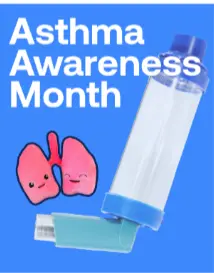
During May—Asthma Awareness Month—we're focused on education, access and advocacy in support of the 27.8 million adults and 4.8 million children in the United States living with asthma. Our efforts and resources include learning opportunities for patients, caregivers, and healthcare professionals. For more information, please visit the Asthma Awareness Month webpage.
World Asthma Day in New York City
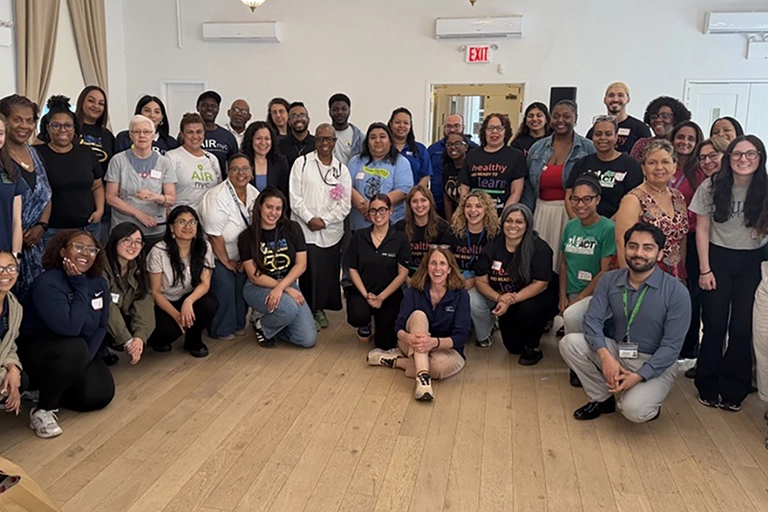
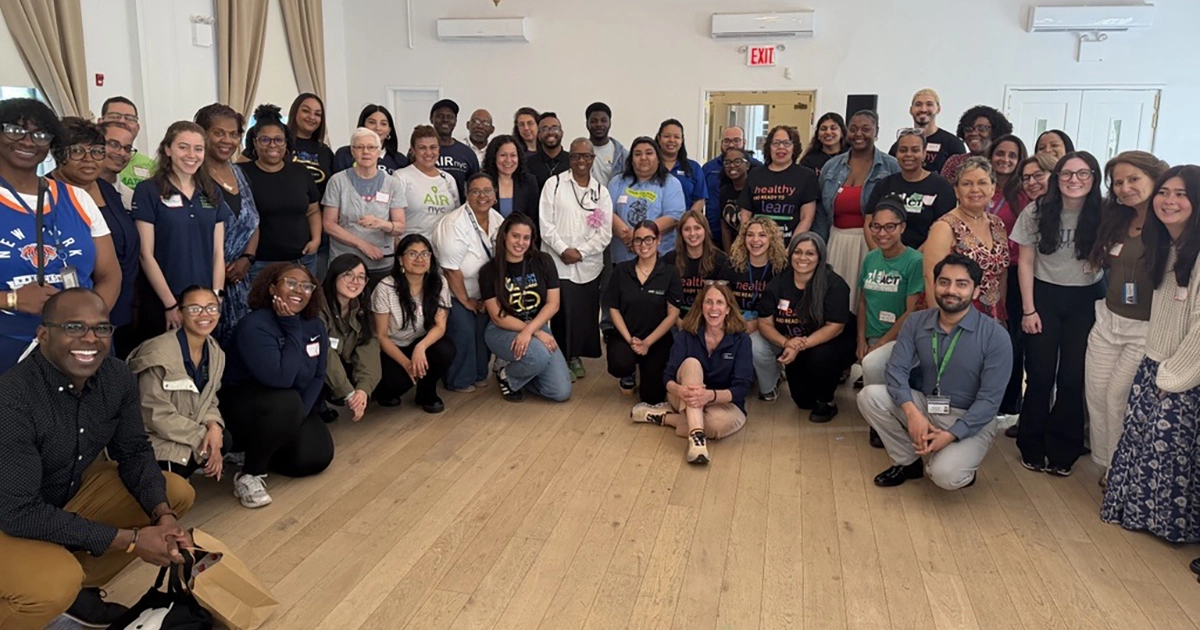
The New York City Asthma Network (NYCAN) hosted its 2nd annual World Asthma Day event on Tuesday, May 5, in the Bronx. Led by Lung Association staff and the NYCAN planning committee, more than 26 organizations came together to share lifesaving asthma education and critical resources. Cross-sector partnerships like this are critical to addressing the burden of asthma in the Bronx, where children experience the highest asthma prevalence and asthma-related emergency department visit rates in the city. Approximately 17% of children in the Bronx are diagnosed with asthma, compared to 11% citywide. Access our comprehensive asthma resources.
Nearly Half of U.S. Children are Living in Communities with Unhealthy Air
Our new “State of the Air” report finds that nearly half of all children in the United States live in communities with unhealthy air. Because their lungs are still developing, children are especially vulnerable to the serious health consequences of poor air quality. In total, 152 million people nationwide continue to breathe unhealthy levels of ozone or particle pollution. At the same time, rollbacks at the U.S. Environmental Protection Agency threaten decades of hard-won clean air progress.

FDA Authorizes Two ‘Kid-Friendly’ E-Cigarette Flavors
This month, the Food and Drug Administration (FDA) authorized a premarket tobacco application for four flavored e-cigarette products including mango, blueberry and two menthol flavors. In a statement, American Lung Association President and CEO Harold Wimmer condemned the FDA's decision, as flavored e-cigarette products, particularly fruit flavors, “clearly appeal to kids. After years of recognizing the dangers e-cigarettes pose to youth, it is deeply troubling to see FDA ignore the scientific evidence and reverse course.” Almost 90% of youth who vape report using flavored products, with the most commonly used products being fruit and candy flavors, and mint and menthol, according to the latest National Youth Tobacco Survey data. Read more.
Events
‘A Big Moving Party for Better Lung Health’
Eighteen years ago, Peggy participated in her first three-day, 180-mile Trek Across Maine. As an asthma and allergy specialist in Portland for many years, she was inspired by the American Lung Association’s mission. In June, Peggy will return to Maine to ride in support of our research, education and advocacy programs. “It is just a blast,” she said. “Every year you think it can’t get better and then there will be something wonderful that happens, beautiful sights, inspiring comradery. It’s just truly one of a kind.”

Read more about Peggy and her commitment to the Lung Association’s largest fundraising event: the 42nd annual Trek Across Maine, June 19-21.
The Lung Association hosts two other cycling events:
- Autumn Escape Bike Trek, Cape Cod, Massachusetts, September 25-27
- Gulf Coast Bike Trek, Dunedin, Florida, October 17
Your Health
What is Nicotine Biohacking and Why is it so Dangerous?
Nicotine has long been linked to tobacco use and proven to be highly addictive. However, health and wellness influencers, as well as tobacco companies, are now touting nicotine use as a biohacking trend—a strategy or “hack” to improve your biological performance or condition. It’s a dangerous suggestion, as experts agree that any short-term benefits of nicotine use are outweighed by longer-term health risks, including nicotine dependence. In fact, commercial tobacco and nicotine product use is the leading cause of preventable death and disease in the United States, killing more than 490,000 people annually. Read more.

How Different Environments Can Lead to Life-Threatening Lung Problems
Two types of pulmonary edema — high-altitude pulmonary edema (HAPE) and immersion pulmonary edema (IPE) — can affect even healthy, physically fit people. This is because environmental pressure changes can cause fluid to rapidly accumulate in the lungs, disrupting normal breathing and oxygen exchange. In a new blog, Jamie Garfield, MD, a thoracic surgeon and Lung Association spokesperson, talks about these less common forms of pulmonary edema, and how to recognize symptoms and protect yourself from potentially life-threatening complications.

Advocacy
U.S. Senate Should Reject House-Passed Bills that Weaken the Clean Air Act
Recently, the U.S. House of Representatives passed three bills, that if approved, would significantly weaken the Clean Air Act, the landmark public health law that has helped millions of people in the U.S. breathe easier. “The bills passed by the House are part of a package the Lung Association and other health and environmental advocates have deemed ‘The Smoggy Skies Act,’ because they would result in more unhealthy air pollution that makes kids sick,” said Lung Association President and CEO Harold Wimmer in a statement.
Research
Retraining the Immune System to Fight Asthma
People with hard-to-treat asthma often must use medications, such as steroids, that broadly suppress the immune system. Ryan M. Pearson, PhD, associate professor of pharmaceutical sciences and director of the Bio- and Nano-Technology Center at the University of Maryland School of Pharmacy, is testing a new approach to fight asthma by reducing harmful immune responses without compromising the entire immune system. Dr. Pearson received a Lung Association Innovation Award. Read more.
Our Funded Research: Pathway Blocking Lung Repair
In a newly published article, Patrick Link, PhD, now of the University of Iowa, and his colleagues at Mayo Clinic report myeloperoxidase (MPO)—an enzyme linked to inflammation—actively promotes pulmonary fibrosis by blocking collagen breakdown rather than increasing collagen production. The team found MPO blocks an enzyme that normally breaks down collagen, causing excess tissue buildup in the lungs even after inflammation has eased. Importantly, MPO levels were elevated in plasma and lung tissue from patients with pulmonary fibrosis and were associated with worse lung function and survival, suggesting clinical relevance. This study was supported in part by funding from the American Lung Association Research Institute.
Each Breath Blog
Lung Cancer Advocate's Journey Started with a Simple Cough
For the last two years, Sue has traveled to Washington, DC, for LUNG FORCE Advocacy Day, speaking with Congressional representatives about the need for lung cancer research and access to care. Sue was diagnosed with stage 3C Lung Cancer after she developed a dry cough. Since then, she’s been through it all—radiation, chemotherapy and immunotherapy. Her advocacy work is based on personal experience, including the need for new treatments and affordable coverage. Read Sue’s story.


Blog last updated: May 18, 2026
