
EGFR Exon 20 at a Glance:
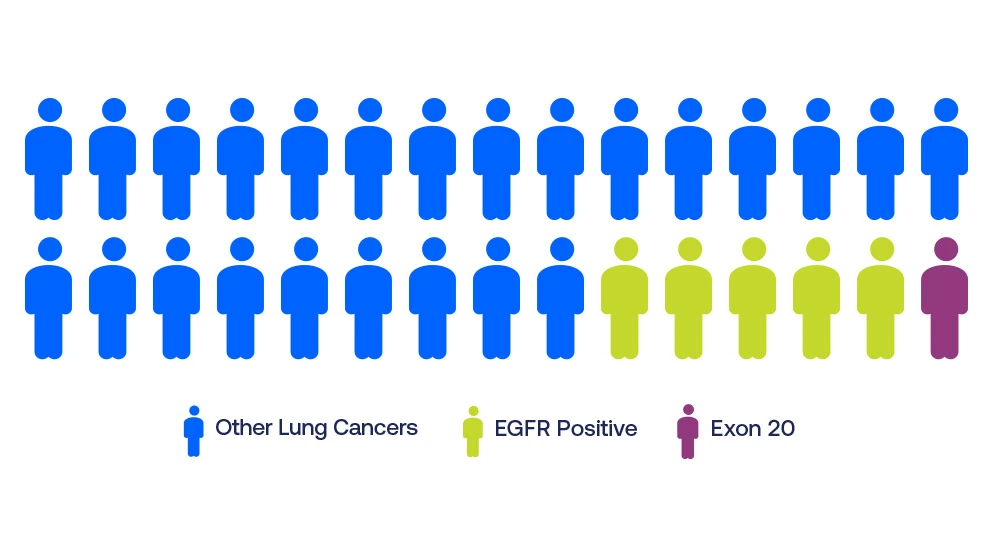
- EGFR exon 20 insertion mutation is a type of lung cancer biomarker.
- Patients who test positive for an EGFR mutation may have an exon 20 insertion mutation.
- The mutation is more often found in people who never smoked and in Asian populations.
What Is an Exon 20 Insertion Mutation?
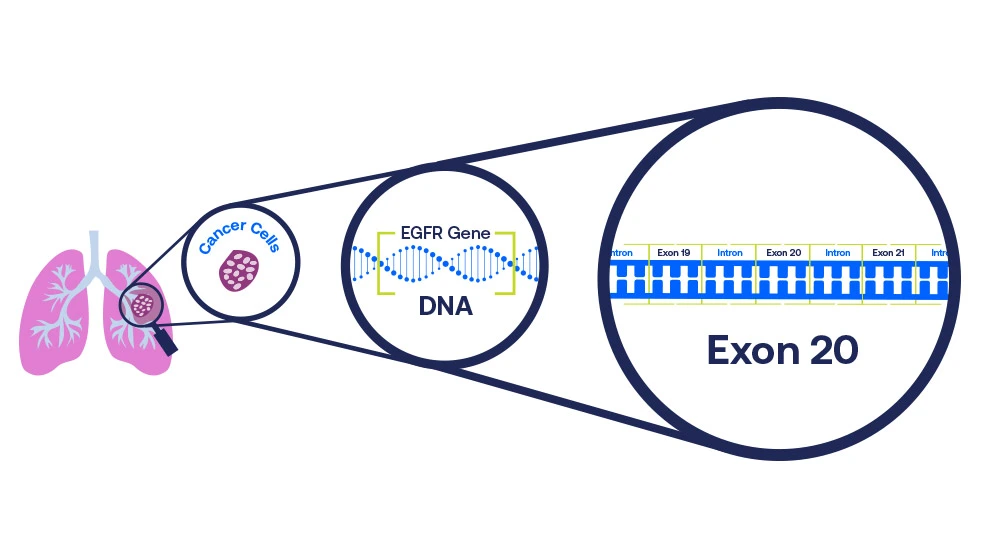
EGFR exon 20 insertions are one type of lung cancer biomarker. They are a type of EGFR mutation that leads to uncontrolled cell growth and development of cancer.
Why Biomarker Testing Matters
- Ensures precision treatment, not trial‑and‑error
- Opens access to FDA‑approved targeted drugs and clinical trials
- Helps clinicians plan the most effective first‑line and subsequent therapies
- Supports better outcomes and quality of life
How Is Testing Done for Exon 20 Insertions?
Testing for EGFR exon 20 insertions is usually done with next‑generation sequencing (NGS) or PCR‑based tests, which look for specific changes in the EGFR gene. These tests can identify exon 20 insertions that differ from more common EGFR mutations and may require different treatment approaches. Liquid biopsy can sometimes detect EGFR exon 20 insertions when tissue is limited, but tissue‑based NGS provides the most complete information.
Learn more about the different types of biomarker tests.
Understanding Your Exon 20 Insertion Test Results
How EGFR Exon 20 Results Influence Treatment
An EGFR exon 20 insertion result can help guide treatment decisions.
What to Do After an Exon 20 Insertion Diagnosis
Someone with an EGFR exon 20 insertion–positive lung cancer diagnosis can take several empowering steps to stay ahead of their care. These are general medical information steps, not personal medical directives, and it’s important to work closely with a qualified healthcare professional for decisions about diagnosis or treatment.
Support and Patient Experiences
Whether you're newly diagnosed or navigating treatment, support resources and patient experiences can help you better understand your options and connect with others.
Connect with Support Resources
- Join our free Lung Cancer Survivors and/or Exon 20 Warriors online support communities on Inspire.
- Request a patient or caregiver mentor.
- Call our free Lung HelpLine to talk to a healthcare professional.
- Connect with the EGFR Resisters Group.
- Connect with the Exon 20 Group.
- It is important to work closely with your physicians to help monitor your medication side effects. Ask about connecting with a supportive/palliative care doctor at the beginning of your treatment to help ensure your side effects are well managed.
View the EGFR Exon 20 Infographic (PDF)
Hear from Other Patients
Hear Carla's inspiring story of how a biomarker test identified her EGFR exon 20 insertion mutation and led to targeted therapy options.
Lung cancer research can move at a rapid pace. Always speak with your doctor about the most up-to-date treatment guidelines.
Medically reviewed by: Jorge Gomez, MD
Last reviewed: June, 2026
Page last updated: August 19, 2026
