


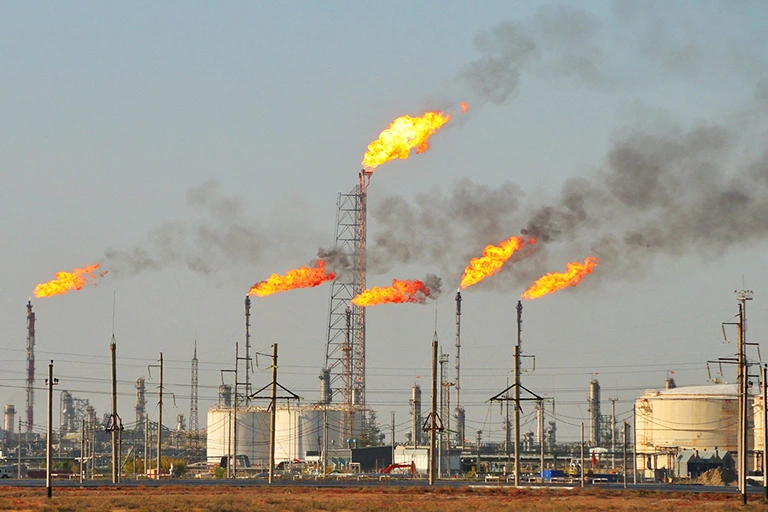
Methane often flies under the radar in conversations about clean air, but this invisible gas poses serious risks for our planet and our health. While most people recognize carbon dioxide as a major driver of climate change, methane deserves equal consideration in the climate conversation.
Methane is the main component of so-called “natural” gas and is released from oil and gas operations, landfills and agriculture. It’s a short-lived but extremely powerful greenhouse gas that also contributes to the formation of ground-level ozone, a harmful air pollutant linked to asthma attacks, lung disease and premature death.
Yet, despite mounting evidence, several myths persist about methane, where it comes from, how serious it is and what can be done about it. Let’s clear the air on some of the most common misconceptions.
Myth #1: “Natural gas” is a clean energy source.
The term “natural gas” might sound harmless or even environmentally friendly, but that’s misleading. This gas is made up mostly of methane, and when methane leaks into the atmosphere, it traps heat far more effectively than carbon dioxide (CO2).
While burning gas produces less CO₂ than coal or oil, the leaks that occur during drilling, processing and transport can erase those climate benefits entirely. In fact, research shows that if as little as 0.2% of methane leaks along the supply chain, the total climate impact of natural gas can be as severe as coal.1 Plus, burning gas in a power plant or appliance releases other pollutants that harm health. Investing in clean, zero-emission energy sources instead of in gas offers a path forward that protects both our climate and our lungs.
Myth #2: Methane emissions solely come from agriculture.
Agriculture, particularly livestock and manure management, is a significant source of methane emissions, but that’s not the whole story. In the United States, the largest source of methane emissions is from animal agriculture, but it is followed closely by the oil and gas industry, which releases millions of tons of methane into the atmosphere each year.2
Methane escapes throughout the entire gas supply chain—from drilling and extraction to processing, storage and transportation. These leaks are often invisible to the naked eye but add up to enormous climate and health impacts. Studies using satellites, aircraft and infrared cameras have revealed that emissions from the oil and gas sector are far higher than previously estimated.3 Researchers have discovered that large, concentrated leaks, known as “super-emitters,” are responsible for a significant share of methane emissions. These leaks often come from a small number of malfunctioning or poorly maintained sites, and many can be fixed quickly with simple equipment upgrades.
While methane emissions do occur from the agricultural sector, cutting methane from fossil fuel operations offers one of the fastest, most cost-effective opportunities to reduce methane – slowing climate change and improving air quality in the process.
Myth #3: Methane isn’t nearly as big of a climate concern as carbon dioxide.
It’s true that CO₂ stays in the atmosphere much longer than methane, but that doesn’t mean methane isn’t harmful. In fact, methane is an extremely powerful greenhouse gas, more than 80 times stronger than CO₂ over a 20-year period.4
Currently, methane is responsible for an estimated 30 percent of the warming the world is experiencing.5 However, since it takes only a decade to break down, reducing methane offers immediate climate benefits. Cutting methane pollution today can slow the climate change health crisis and protect the health of vulnerable groups such as children, the elderly and people with preexisting conditions.
In short, carbon dioxide drives long-term climate change, but methane drives the speed of it. Tackling both is essential, and reducing methane is one of the quickest ways to slow the warming of the planet and safeguard public health.
Myth #4: Methane is only a climate concern, not a health problem.
While methane itself isn’t directly toxic to breathe, it fuels the creation of ground-level ozone and is released alongside many other pollutants. Ground-level ozone, otherwise known as smog, is a dangerous air pollutant that harms lungs and worsens many chronic diseases. When methane reacts with other pollutants in sunlight, it forms ozone, the same type of pollution that sends children and adults with asthma to emergency rooms on hot summer days.
Ozone exposure acts like a sunburn on your lungs, and can cause coughing, shortness of breath, inflammation and asthma flare-ups. Long-term exposure is linked to reduced lung function, increased risk of respiratory infections and premature death.6
Furthermore, when methane is released, it is released alongside many other health harming pollutants such as volatile organic compounds (VOCs) and cancer-causing benzene and formaldehyde. VOCs can cause nose, eyes and throat irritation, difficulty breathing, nausea and even organ damage.7 This means communities near oil and gas operations face greater risks to lung health.
Reducing methane is therefore not just a climate solution, it’s a public health imperative. By tackling methane, we can lower ozone levels, prevent illness and help everyone breathe cleaner air.
Myth #5: Methane emissions are too hard to measure accurately.
Until recently, measuring methane emissions relied on rough estimates or self-reported data. But that’s changing rapidly, and today’s technology makes methane visible.
High-resolution satellite imagery, continuous monitoring systems and aerial surveys now provide real-time data on where methane is leaking and how much is being released.8 These tools are not only improving transparency but also helping identify the biggest opportunities for action. A small number of “super-emitter” facilities are estimated to be responsible for a large portion of methane emissions. Identifying these facilities through monitoring allows for quick, easy and highly impactful fixes.9
Regulations that require regular monitoring and repair of leaks can make a major difference. By combining better detection with strong accountability, we can cut methane pollution quickly and cost-effectively.
Myth #6: Addressing Methane Leaks is Too Expensive
The technologies to detect and fix leaks already exist and can be deployed today. Additionally, many of the most effective methane reduction measures are remarkably affordable. An analysis from the International Energy Agency found most methane emissions from the oil and gas sector can be reduced using existing technologies at little to no net cost.10 That’s because capturing leaked methane can result in selling the methane that would otherwise be wasted.
Simple measures like replacing worn seals, tightening valves, upgrading pneumatic controllers and improving maintenance can deliver big results. These repairs are typically low-cost, quick to implement and highly effective.11 Studies show that cutting methane emissions from oil and gas operations is among the cheapest climate actions available today, and in many cases, operators save money over time through recovered gas.12
Moreover, smart policy can further reduce costs. Federal and state methane standards help level the playing field, ensuring all operators are accountable for preventing waste and protecting public health. Investing in methane mitigation creates jobs in manufacturing, monitoring and maintenance, while helping communities avoid the costly health and climate impacts of inaction.13
When we consider the economic, health and environmental benefits together, addressing methane leaks isn’t too expensive; not addressing them is.
A Clear Path Forward
Debunking these myths is more than a matter of scientific accuracy, it’s about protecting people’s health. Methane drives climate change, which worsens heat, wildfires and ground-level ozone, all of which can harm the lungs. By acting on methane, we can make a meaningful difference right now. Strong federal and state policies to reduce methane emissions from the oil and gas industry, combined with monitoring and enforcement, will deliver cleaner air, healthier communities and a safer climate future. When it comes to methane, the facts are clear: reducing emissions is one of the fastest, most effective ways to protect both our planet and our lungs.


Blog last updated: December 5, 2025
