


How to Treat a Collapsed Lung
The goal of treatment is to relieve the pressure on the lung and allow it to re-inflate. The type of treatment selected will depend on the cause and severity of the collapse, and on your overall health.
For a minor pneumothorax, your healthcare provider may simply keep an eye on you, as the lung may re-inflate on its own, usually over the course of several weeks. In these cases, your provider may suggest supplemental oxygen and require you to schedule follow-up visits to ensure that the problem does not worsen.
For a more serious pneumothorax, a needle aspiration or chest tube may be inserted into the chest cavity to remove the excess air. During a needle aspiration, a needle attached to a syringe is inserted between the ribs into the air-filled space that is pressing on the collapsed lung and is used to suction out the excess air. A chest tube involves a similar insertion that involves a one-way valve device that continuously removes air until the lung re-inflates. The tube may need to stay in for a few hours, or even a few days, to ensure that the lung does not collapse again.
In collapses that involve an accident, or repeated collapsed lungs, the next step may be a procedure called pleurodesis. Your provider would make a small cut in your chest and insert a tube to use chemicals that attach your lung to your chest cavity. This eliminates the space where air or fluid can build up. In the most extreme cases, surgery may be necessary to close the leak or remove the collapsed portion of the lung.
Preventing a Repeat Pneumothorax
You will need to avoid air travel for a period of time after a lung collapse. It is important to talk to your provider if you are planning to travel to find out when your provider recommends flying again. Certain lifestyle choices can put you at a higher risk for having a pneumothorax including diving, activities with drastic changes in air pressure, smoking tobacco and drug use.
Once you have had a pneumothorax, you are at greater risk of having another one. You should discuss your increased risk with your healthcare provider.
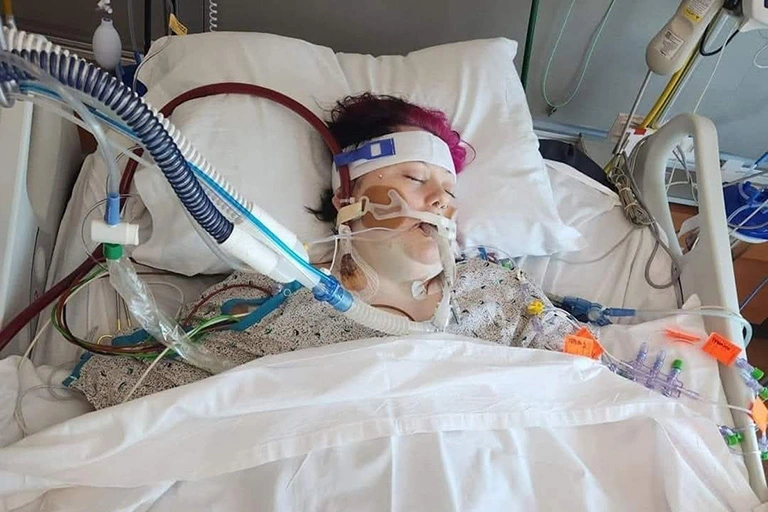
“I’m 26 and My Lungs Collapsed:” A Vaping Emergency
Petrea didn’t know when she started vaping that it would change her life forever.
Page last updated: February 18, 2026
